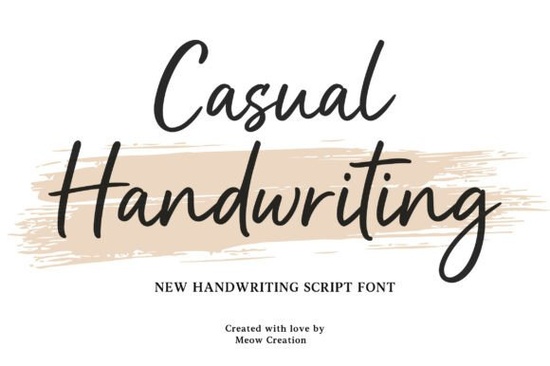
If you've ever searched for a handwritten font that actually reads like natural handwriting instead of a decorative display piece, you know how rare that balance can be. Casual Handwriting is a simple and natural handwritten script font that manages to feel relaxed without sacrificing clarity. It avoids the overly rough or excessively polished extremes, making it a practical choice for designers who need text that feels personal but stays legible across different uses.
What makes Casual Handwriting different from other script fonts?
The main difference is how it handles readability while keeping a hand-drawn feel. Many script fonts either look too neat like they were traced digitally or too messy to use for actual content. Casual Handwriting lands somewhere in between. The soft curves and balanced strokes give it a warm, friendly appearance that works well for both short phrases and longer lines of text.
For designers who regularly work with script styles, it's useful to compare with other options. For example, Letterland offers a more structured script approach, while Casual Handwriting leans casual and open. Neither is better they just serve different project needs. If your brief calls for something that feels handwritten but not rushed, this font is a solid pick.
Where can you use Casual Handwriting in real projects?
Print-on-demand sellers and small business owners often ask whether a font can handle multiple formats. Here are specific places where this font fits naturally:
- T-shirt and apparel designs. Short phrases and single words work well because the strokes are clean enough to read at a distance but still look hand-lettered up close.
- Social media quote graphics. The relaxed style makes quotes feel genuine rather than templated. Pair it with a simple sans-serif for a clean layout.
- Invitations and event stationery. Birthday invites, casual wedding details, and save-the-dates benefit from the warm, personal tone. The font remains readable even at smaller sizes for dates and locations.
- Branding for local businesses. Coffee shops, boutique stores, and creative services often want a logo that feels approachable. This font gives that handmade look without looking unprofessional.
If you're working on seasonal projects, Christmas font styles add festive character, but for year-round versatility, Casual Handwriting adapts to most themes without feeling out of place.
How does this font perform in wedding and event invitations?
Wedding stationery is one of the most demanding use cases for script fonts. Brides and clients often want something that feels romantic but doesn't sacrifice readability. Casual Handwriting works well here because it's less ornate than traditional wedding scripts. It suits modern, minimalist, or outdoor-themed weddings where a formal calligraphic look might feel too heavy.
For comparison, The Wedding Signature offers a more polished, ceremonial style. Both have their place. If the invitation set includes lots of decorative details like floral borders or foil accents, Casual Handwriting complements them without competing. If the design is minimal, the font carries the visual warmth on its own.
What design tools and font pairings work best?
You can use Casual Handwriting in any standard design application Canva, Adobe Illustrator, Photoshop, Affinity Designer, or even simpler tools for personal projects. It works best as a display font for headings, short text blocks, and single words. For body copy or long paragraphs, stick to a clean sans-serif.
Good pairing options include Montserrat, Lato, Open Sans, or any neutral sans-serif that doesn't introduce competing visual noise. The contrast between a relaxed script and a structured sans-serif creates a balanced layout that's easy to read.
For those exploring similar styles, Montana has a slightly bolder presence that layers well with Casual Handwriting for stacked text designs. And if you're building a brand kit that needs multiple coordinated styles, Ourstory offers a duo set that pairs script with matching sans-serif characters.
Practical things to check before using the font in your design
Before you finalize a project with Casual Handwriting, run through these simple checks:
- Test the font at the actual output size. What looks good on screen at 200% zoom may feel different at print size or on a mobile screen. Print a sample or test it in your social media mockup.
- Avoid mixing it with other handwritten fonts. Stick to one script per design. Pair it with a clean sans-serif instead for contrast and readability.
- Adjust letter spacing for longer phrases. In some word combinations, a small tracking increase improves readability without losing the handwritten character.
- Use it on light or neutral backgrounds. The warm style stands out best when it's not competing with busy patterns or low-contrast dark backgrounds.
- Check legibility for your specific audience. If your readers include older adults or people with visual preferences, test the font at the size and distance they'll actually see it.
Quick checklist before you publish or print
- Is the font large enough to read at the intended viewing distance?
- Does the background provide enough contrast for the stroke weight?
- Have you tested the design in black and white to confirm legibility without color?
- Does the overall tone of the font match the brand or event personality?
- Have you considered how the font will look on different devices and paper types?
If you need a straightforward, everyday script font that doesn't fight for attention, Casual Handwriting delivers exactly what it promises: a readable, friendly handwritten look that works across projects without extra effort.
Download Now Creative Wedding Day Font Ideas for Your Invitations
 Colorful Typography Designs & Creative Projects
 Festive Christmas Fonts for Your Holiday Designs
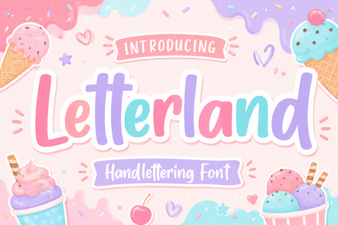 Creative Letterland Font Projects for Kids
 Best Lucky Font Choices for Creative Designs
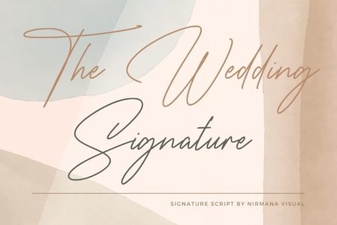 The Wedding Signature Font: Elegance for Your Invitations